





Perform with FCCSA
Join our Content Team to create and share knowledge.
Learn how to be part of it



Be acquainted with our purpose, values, history and all that makes the FCC S.A. essence

A portfolio of products and solutions plenty of innovation, technology and sustainability.

To deliver products with leading edge technology and global quality is just our starting point. That is why we have a series of exclusive services for our customers and that make all the difference on a daily basis.

See in practical terms how innovation is present in the FCC S.A. DNA

Sustainability is present in every solution, delivery and process of our company: learn more.

We are made of synergy! Learn how you can become a FCC S.A. supplier

Learn how it is to work with FCC.S.A. Learn our culture, programs and check for opportunities.

Integrity and transparency are part of what we are. Check our annual reports and see the result of our work.

Find a variety of contents that permeate our businesses and see how you can be a part of what we create around here.

Together, we create more! Be a FCC S.A. partner and generate value for a world in transformation: learn how.

Metallic contaminants such as nickel (Ni), vanadium (V), and iron (Fe) are present in varying concentrations in crude oil. The deposition of these metals on the FCC catalyst is inevitable during catalytic cracking and intensifies in the processing of residual streams (residual vacuum gas oil, atmospheric residue). The deactivation mechanism and the operational impact of each contaminant are distinct from one another.
Vanadium stands out as the contaminant with the greatest impact on catalytic activity in operations with residual feeds. Unlike iron and nickel, which predominantly deposit on the outer surface of catalyst particles, vanadium has high mobility in the regenerator oxidizing environment and interacts directly with Y-zeolite, the catalytic component responsible for the majority of the cracking activity. The result is the progressive and irreversible destruction of the zeolitic structure, with a reduction in specific surface area, crystallinity, and density of Brønsted acid sites [1, 2].
The database of FCCSA and Ketjen shows consistent growth in the relative vanadium content in equilibrium catalysts (Ecat) monitored over the past five years, reflecting the trend of refineries processing progressively heavier and more contaminated streams. Understanding the vanadium action mechanism and developing effective catalytic solutions for its control are fundamental technical requirements for the profitable operation of FCC units handling challenging residual feeds.
X-ray microfluorescence tomography scans of Ecats with high concentrations of metallic contaminants reveal that calcium and iron are predominantly concentrated on the outer surface of the catalytic particles [3]. These elements deposit in the peripheral region and, together, compromise access to the particle internal structure and the catalyst fluidization properties.
Vanadium shows a totally different behavior. In the regenerator, under oxidizing conditions and temperatures between 690-750 °C, vanadium is oxidized to the pentavalent state (V5+), forming vanadium pentoxide (V2O5). This compound has a melting point of 690 °C, a value commonly lower than the operating temperatures of the FCC regenerator, which gives it high mobility in the molten state. As a result, vanadium penetrates the interior of the catalytic particle and reaches the Y-zeolite, as demonstrated by different literature reviews (EDS and X-ray fluorescence tomography) on cross-sections of Ecat particles [3].
This intrinsic mobility, absent in other metallic contaminants, is the determining factor of vanadium's distinct destructive effect on the catalytic activity of the unit.
During the operation of an FCC unit, Y-zeolite undergoes natural aging due to the severe temperature and steam conditions found in the regenerator. However, when vanadium is deposited on the catalyst, this degradation process is significantly accelerated.
Although acidic vanadium compounds can interact with the zeolite structure and contribute to its destruction (via removal of aluminum from its framework), experimental evidence shows that the main deactivation mechanism in commercial FCC catalysts is related to the interaction between vanadium and sodium [4,5].
The main effect of vanadium on the zeolite does not occur through direct attack on the crystal structure, but by mobilizing part of the sodium present in the catalyst, favoring the formation of sodium hydroxide (NaOH). NaOH is a highly alkaline compound that attacks the Si–O bonds in the zeolite structure, causing loss of crystallinity, reduction of specific surface area, and decrease in the zeolite catalytic activity [4].
This interaction explains why refineries processing feeds with higher sodium contamination are prone to experience more intense catalyst deactivation, even when operating with similar vanadium levels in the Ecat. Sodium can be introduced into the unit due to inefficient desalting, stream contamination, or processing of oils with high salt content.
In addition to the destruction of zeolite, vanadium in its oxidized state (+5) acts as a catalyst for dehydrogenation reactions, leading to an increase in hydrogen yield and delta coke in the riser. These effects can introduce operational constraints related to the wet gas system capacity, increase the regenerator temperature, and reduce the production of higher-value liquid products [6].
The dehydrogenation activity of vanadium increases with the oxidation state: V5+ is more active than V4+. As a result, this effect is more pronounced in units operating in full burn mode, where the catalyst inventory circulates under more oxidizing conditions and vanadium is predominantly in the pentavalent state.
The combination of two mechanisms, acceleration of zeolite destruction and dehydrogenation, underpins the active monitoring of vanadium and sodium as a technical priority in refineries processing residual feeds with high metal content.
The systematic monitoring of the vanadium impact on the catalyst requires analysis of four complementary dimensions of the Ecat:
X-ray fluorescence (XRF) analysis allows for the precise determination of vanadium and sodium content present in the Ecat. Continuous monitoring of these elements provides information on the accumulation of contaminants in the catalytic inventory and is used to correlate the level of metals with the loss of catalyst performance over time.
X-ray diffraction (XRD) quantifies the relative crystallinity of the catalyst compared to the fresh catalyst. Progressive reductions in the crystallinity index indicate destruction of the zeolitic framework. Monitoring the retention of crystallinity as a function of vanadium accumulation in the Ecat allows for early diagnosis of deactivation and estimation of the inventory degradation rate.
The N2 physisorption analysis allows for determining the total specific area and, through analytical treatment, the zeolite area (ZSA). The decrease in the specific area is one of the most sensitive indicators of deactivation by vanadium, particularly the loss of zeolitic microporosity. The correlation between the increase in vanadium content in the Ecat and the reduction of ZSA constitutes a diagnostic tool of high operational value.
Experiments that assess the catalyst (MAT, ACE, or FST) performance can also be used as a supplementary tool in monitoring the vanadium impact onto the unit. These analyses translate the structural changes of the Ecat into a direct impact on product yields. The periodic monitoring of catalytic activity as a function of vanadium content in the Ecat, integrated with XRD and N2 physisorption analyses, enables the early identification of deactivation trends before they become noticeable and/or significant in the commercial unit yields.
Data from FCCSA indicate that in catalysts without specific protection mechanisms against vanadium, the specific surface area decreases from approximately 200 m2/g to values below 80 m2/g as the vanadium concentration in the Ecat increases from 4,000 to 12,000 ppm. In the same interval, the MAT activity shows a similar behavior, decreasing from about 74% to approximately 63% (Figure 1). This loss of performance is associated with the progressive collapse of the zeolitic structure caused by the interaction of vanadium and sodium with the crystal framework, a phenomenon also illustrated in Figure 1.
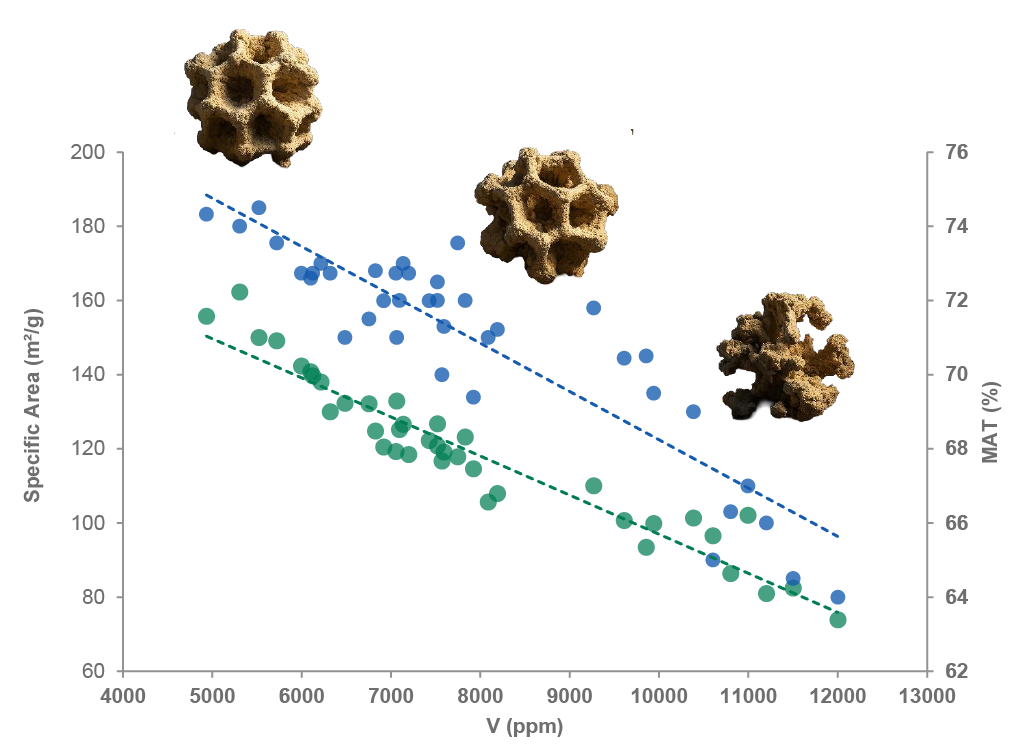
Figure 1. Effect of increasing vanadium concentration on the physicochemical properties
of an FCC catalyst without a specific vanadium passivation mechanism.
Reductions of this magnitude result in loss of conversion, more heavy bottoms, and less gasoline in the commercial unit, and are often mistaken for variations in feed quality when the analytical monitoring of the Ecat is not conducted carefully and systematically.
The catalytic strategy to mitigate deactivation by vanadium involves incorporating components into the catalyst that can react with vanadium, immobilizing it before the formation of vanadic acid and the subsequent reaction with sodium occur.
There are vanadium trap (V-Trap) versions available on the market that use alkaline earth metal oxides, such as CaO and MgO, as reactive sites for vanadium passivation. However, these oxides show a competitive reaction that limits their operational effectiveness: the SOx present in the FCC regenerator preferentially reacts with CaO or MgO, sulfating them before they can react with vanadium.
Thermodynamic calculations indicate that the order of preference for sulfation among oxides commonly used as traps is as follows, from most to least reactive with SOx: Ba > Ca > Mg > rare earth oxide. Therefore, rare earth oxides are the most tolerant to the presence of SOx under regenerator conditions, preserving their ability to react with vanadium even in units processing feeds with high sulfur content.
The V-KetchTM technology developed by Ketjen in partnership with FCCSA consists of a V-Trap that incorporates rare earth oxides (TR2O3) into the catalyst matrix. The passivation reaction can be described as:

The rare earth vanadates (TRVO4) formed are thermodynamically stable compounds under the regenerator conditions. The immobilization of vanadium in the matrix phase drastically reduces its mobility towards the zeolite.
The positioning of rare earth elements in the catalyst matrix, and not exclusively associated with the zeolite, is paramount for the protection mechanism effectiveness. When incorporated into the matrix, the TR oxides become available to react with vanadium immediately after its entry into the particle, in the peripheral region, before the vanadium reaches the zeolite.
V-Traps also affect dehydrogenation activity: by immobilizing vanadium in the form of rare earth vanadate, the V-KetchTM technology reduces the concentration of active vanadium available for dehydrogenation reactions in the riser, contributing to lower hydrogen yields and reduced coke formation.
The comparative evaluation between catalysts with and without V-Traps (Figure 2), subjected to increasing levels of contamination in the laboratory, demonstrates consistently superior structural preservation for systems with the V-Trap.
In the range of 1000 ppm to 4000 ppm of vanadium, the base catalyst retains 48 to 28% of the original zeolite area, while the catalyst with the V-Trap maintains 54 to 38% under the same conditions, respectively. The difference between the base catalyst and the one with the trap is greater at higher levels of vanadium, precisely when the vanadium action is more detrimental to the catalyst, and it is possible to observe the trap's role in protecting the zeolite.
The retention of crystallinity follows a similar trend (Figure 2): in the same contamination range, the base catalyst shows 63 to 36% crystallinity relative to the virgin catalyst, compared to 65 to 45% for the system with the V-Trap.
The differential preservation of area and crystallinity corresponds to maintaining a higher density of active acid sites in the Ecat inventory, directly impacting cracking activity and unit yields. In practical terms, a catalyst with a higher zeolite area retention under high metal contamination prevents the refinery from having to implement significant increased additions to adjust inventory quality during the processing of more contaminated feeds, without significant impacts on the unit's operational cost.
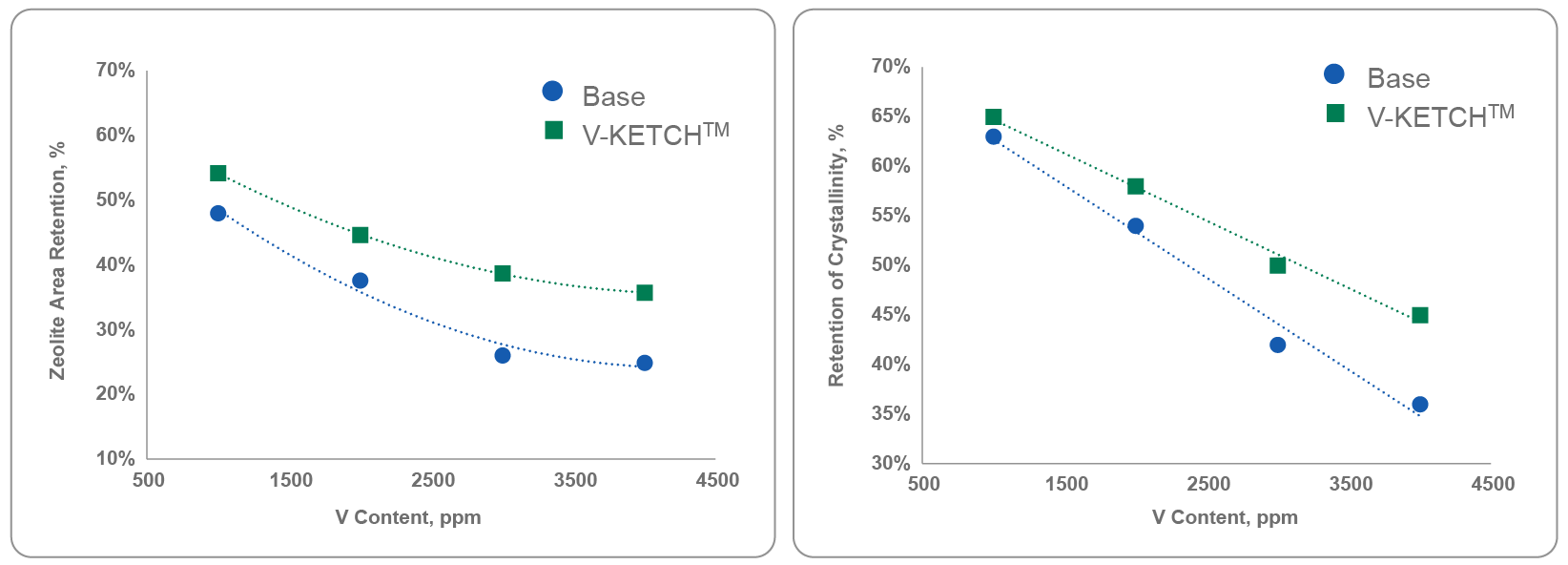 Figura 2. Figure 2. Evidence of the V-Trap efficiency: preservation of the zeolite structure
and pore system at different vanadium levels in the catalyst.
The comparative evaluations (Table 1) showed that V-KETCHTM more efficiently preserves catalytic activity during deactivation, resulting in higher levels of conversion and gasoline yield, as well as lower production of heavier bottoms compared to the base catalyst. This behavior is directly related to the greater preservation of the zeolite's crystalline structure, as discussed in Figure 2.
The results are consolidated in Table 1.
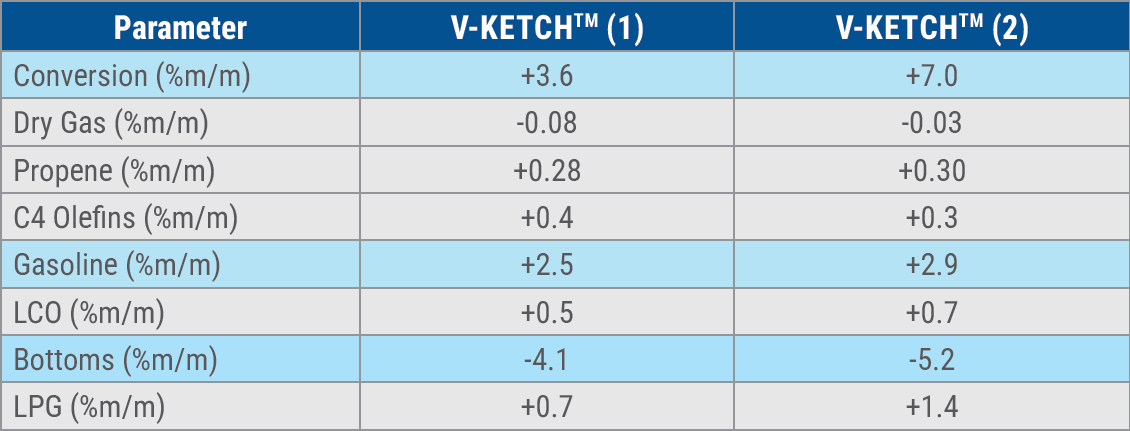
Table 1. Comparative performance evaluation between the base catalyst and the V-KETCH™ (1) and V-KETCH™ (2)
formulations. The results were obtained under the same experimental conditions.
For the same level of coke generation, catalysts with a V-trap show significantly higher conversion (+3.6 to +7.0 percentage points), with an increase in gasoline (+2.5 to +2.9 percentage points) and a significant reduction in heavy bottoms (-4.1 to -5.2 percentage points). The dry gas yield remains practically unchanged, indicating that the conversion gain is attributable to the cracking of heavy bottom molecules and not to the intensification of dehydrogenation or thermal cracking reactions.
Vanadium represents one of the main challenges for FCC catalysts. Its ability to migrate into the interior of the particle and promote reactions that destroy the integrity of the zeolite results in a loss of performance for the refinery.
The V-KetchTM V-Trap, based on rare earth oxides incorporated into the catalyst matrix, acts directly on this deactivation mechanism. Its superior thermodynamic tolerance to SOx, compared to conventional traps based on alkaline earth oxides, is a significant technical advantage for refineries processing high-sulfur feeds. The laboratory results presented demonstrate consistent gains in activity, conversion, and yield of higher value-added products.
The practical recommendations for a refinery operating with increasing levels of vanadium in the Ecat are:
The Technical Services team at FCCSA is available to support the analysis of the Ecat deactivation profile and to identify the catalytic technology best suited to the operational conditions of each unit.
Related Publications


What did you make of the publication?